Fuse design, simulation and live-testing
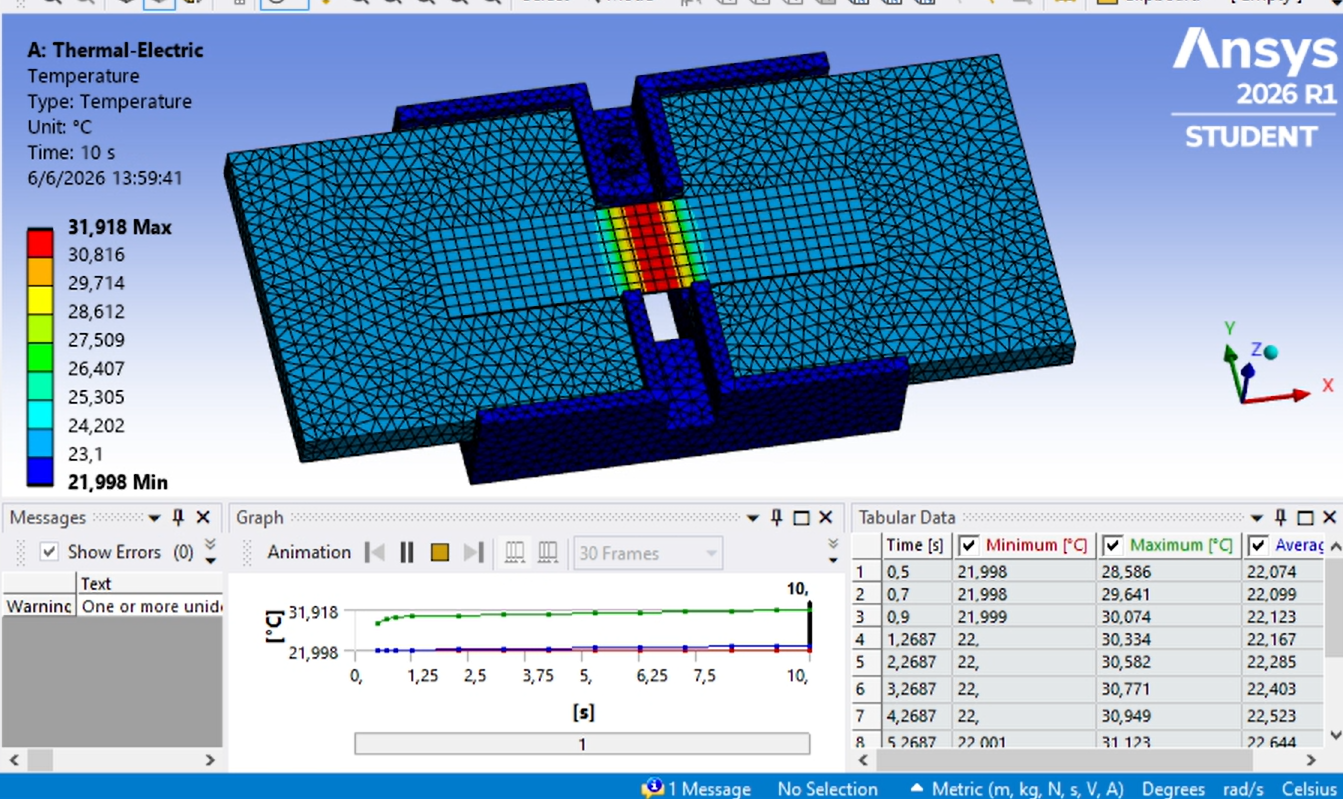
ANSYS fuse simulation for a battery bank.
FSAE
At the start of 2026, I joined my university's FSAE team to develop the battery system of the vehicle. As a member of the battery and BMS team, I participated in the design and validation of the fuses that protect each cell group in the high-voltage accumulator.
The Challenge
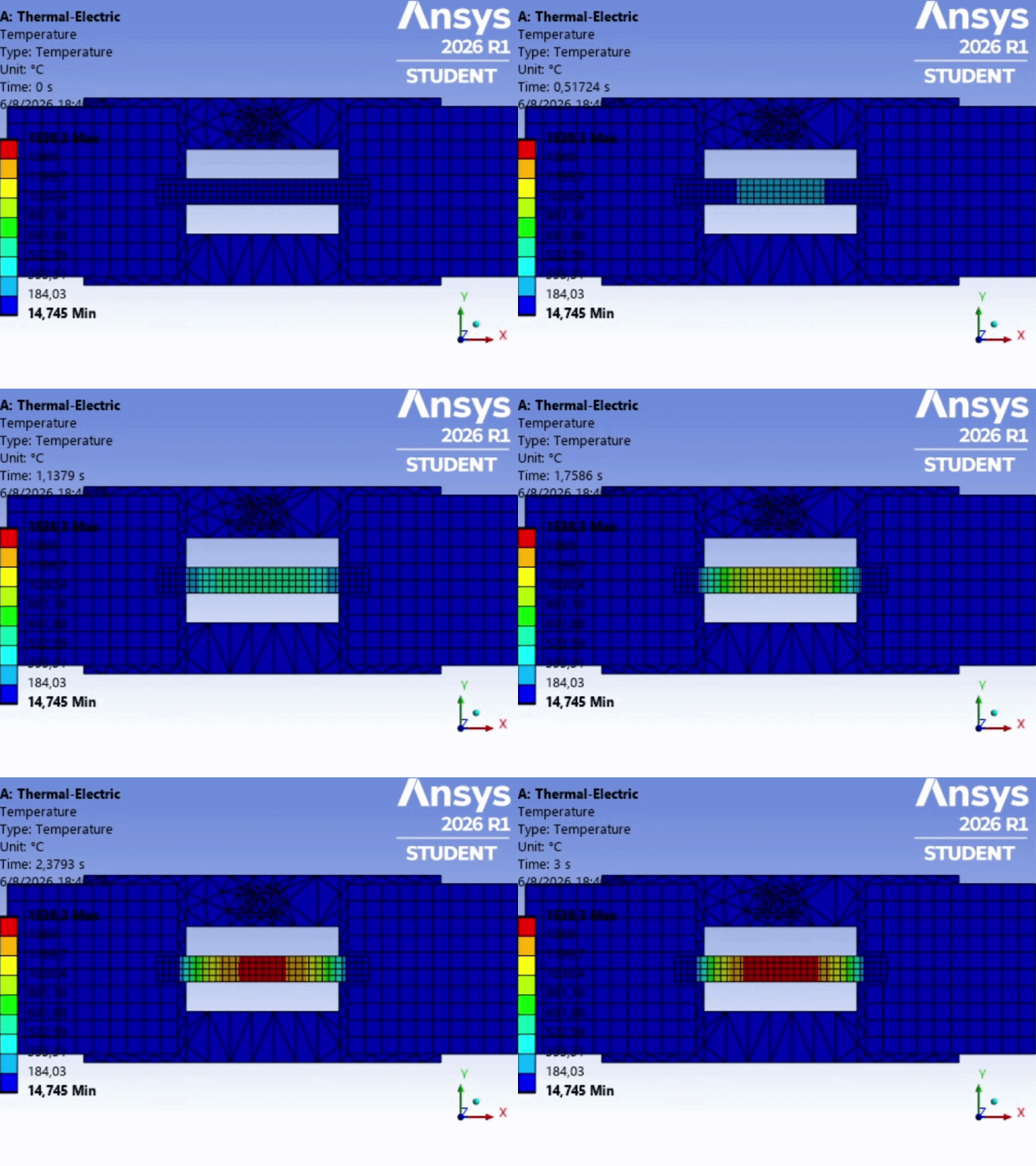
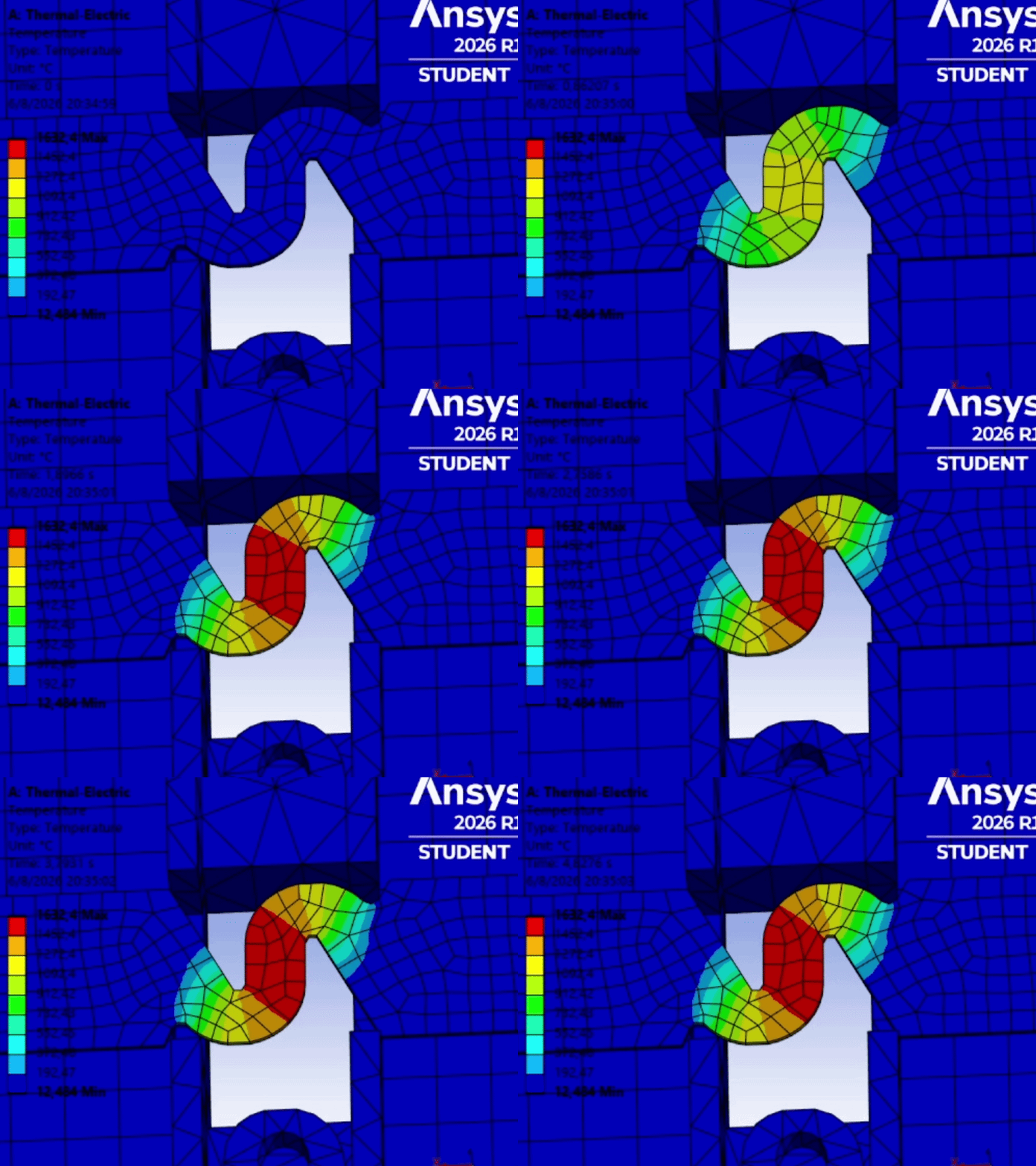
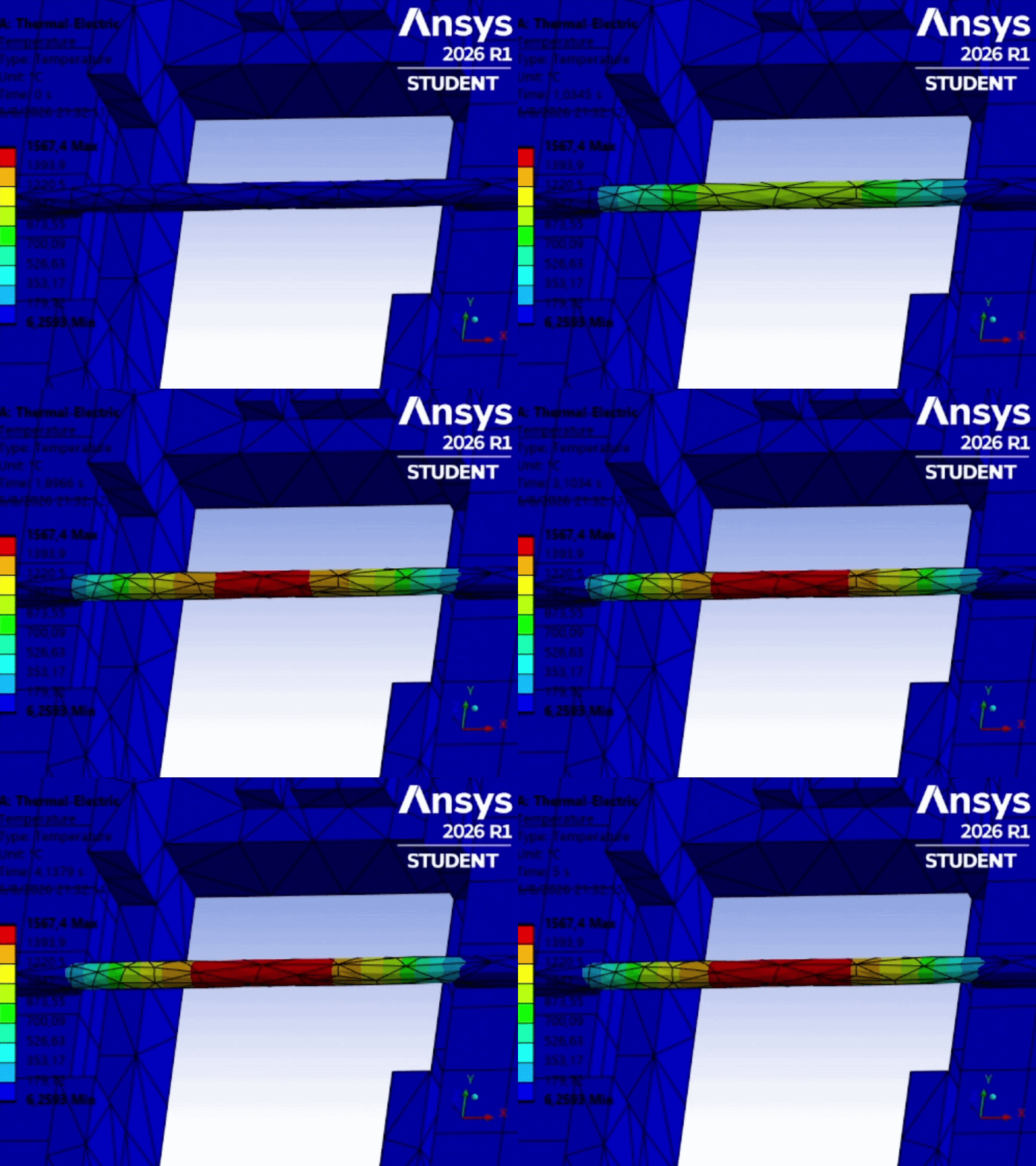
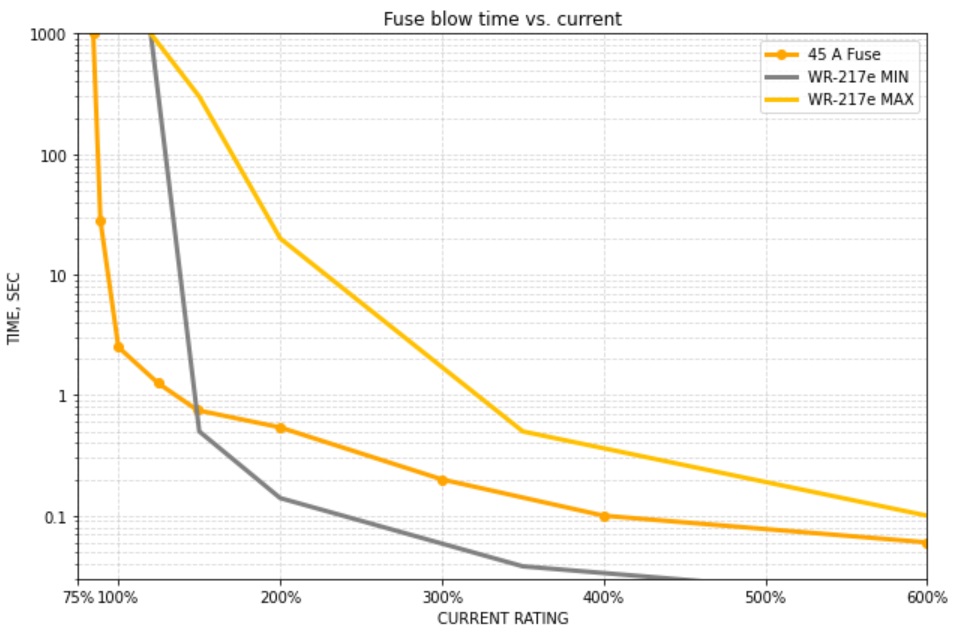
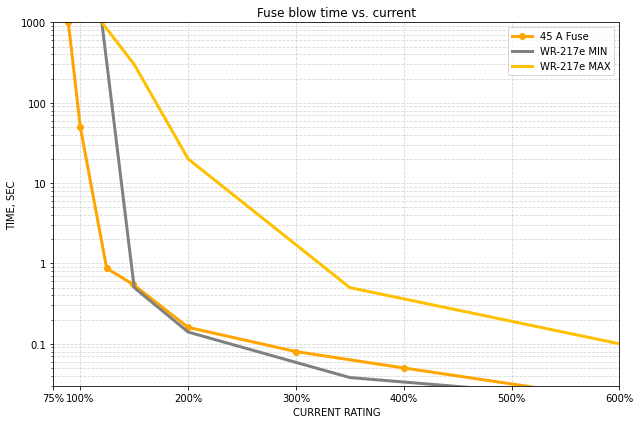
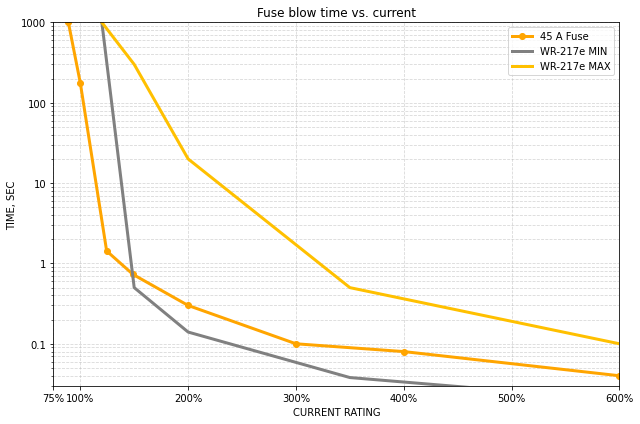
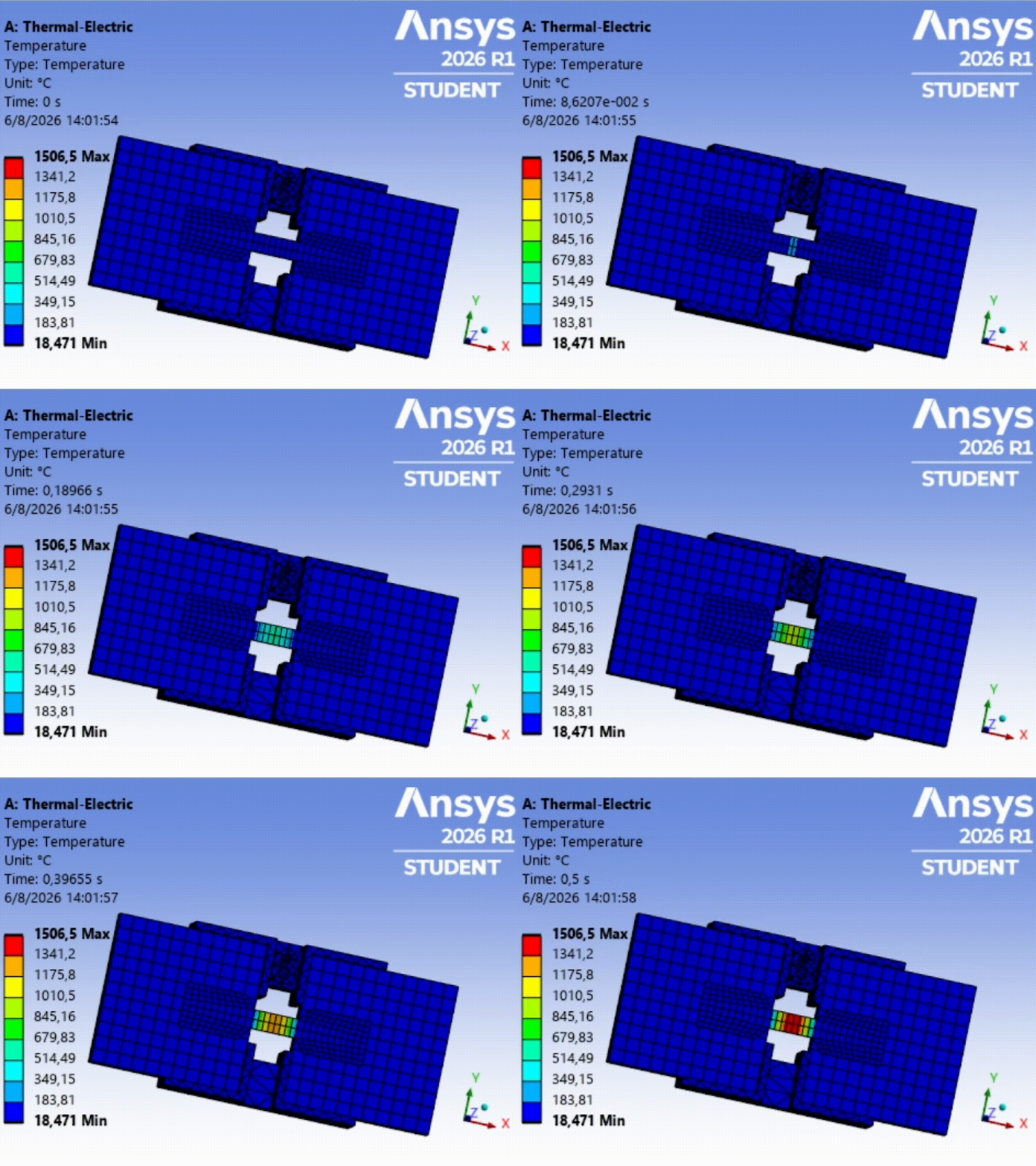
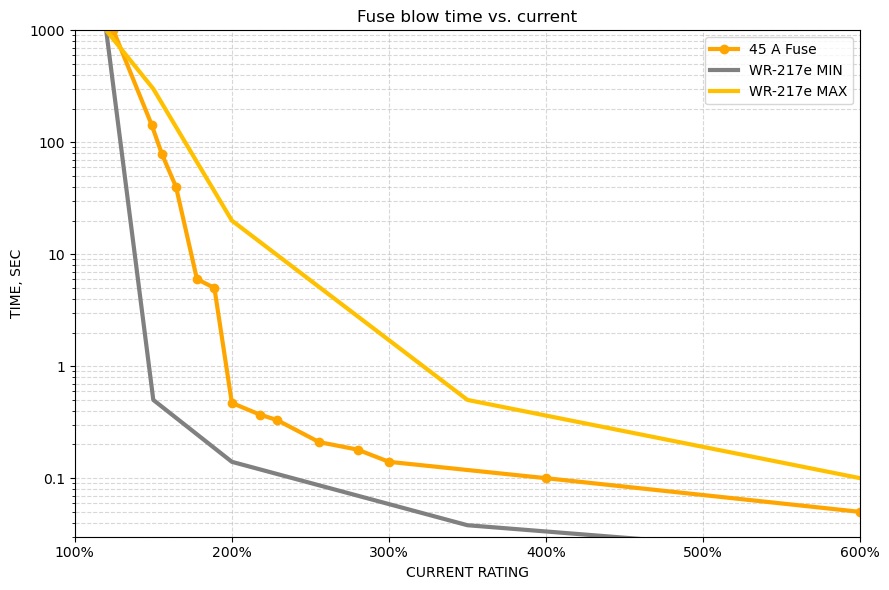
The goal was to make a 45 A fuse capable of reproducing the operating curve of the WR-217e. To achieve this, I designed different models using copper and nickel 200 and evaluated their performance through electro-thermal simulations in ANSYS.
Since ANSYS did not include Nickel 200 in its material library, I made a custom material using electrical and thermal property data obtained from VDM Metals.
Analysis Automation
Evaluating each design required simulating multiple currents and determining the instant in which the material reached its melting temperature. To streamline this repetitive work, I developed two Python scripts that controlled ANSYS, automatically ran the simulations, exported the results, and generated summary tables with the cutoff times. This allowed us to iterate through designs much faster, giving us more time to refine small details.
I also implemented a binary search algorithm that found the cutoff current of a design using the minimum possible number of simulations, significantly reducing the time required to validate new geometries.
Results
The automation made it possible to evaluate designs much faster and facilitated iteration throughout the development process. Finally, the simulation results were validated using a test bench with a TIG welder as the power source and an HO-250 current sensor, obtaining cutoff times consistent with the simulated values and affirming the accuracy of the model.